Bamboo as Architecture
A Multipurpose Wellness Pavilion in Uganda
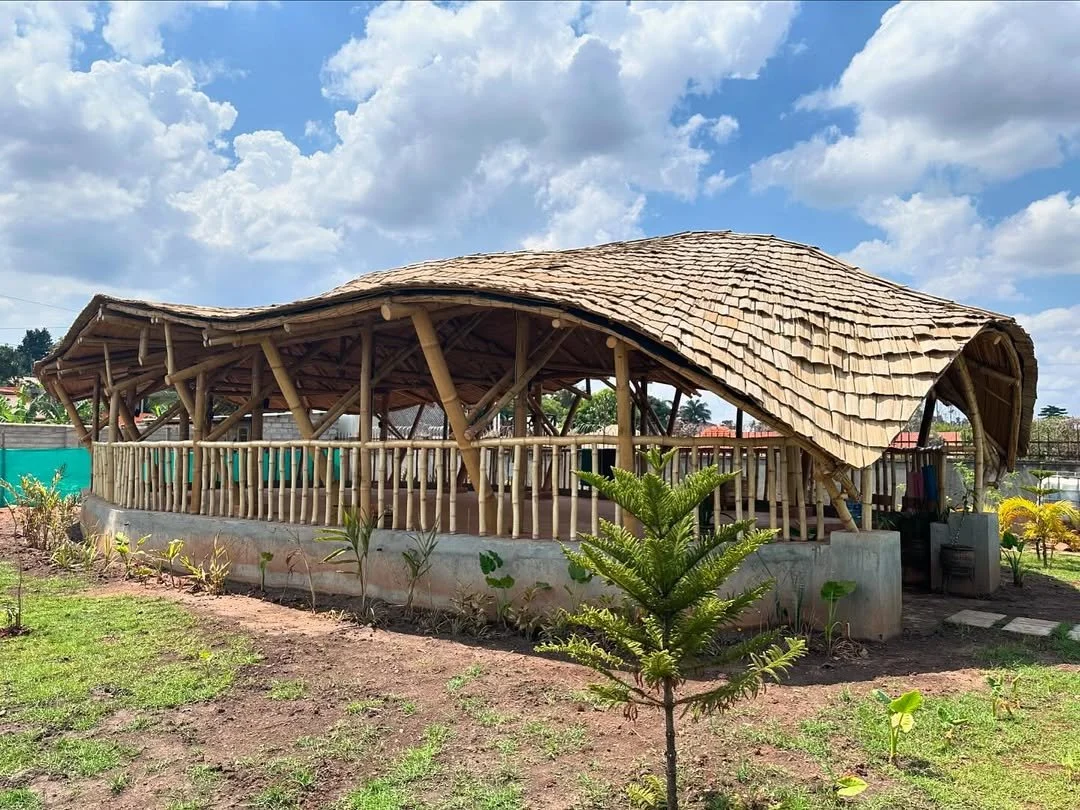
In regions where construction often depends on imported, carbon-intensive materials, the Bamboo Project in Uganda proposes a radically simple yet powerful alternative: build entirely from what is locally available. Designed as a multipurpose wellness pavilion, the project demonstrates how bamboo—often dismissed as a temporary or informal material—can become a structural, spatial, and architectural solution.
Addressing the Sustainability Challenge
Uganda faces a dual challenge common across many developing regions: rapid growth paired with limited access to sustainable, affordable construction systems. Conventional building methods frequently rely on concrete and steel, increasing environmental impact while disconnecting architecture from local economies and craftsmanship.
The Bamboo Project was conceived to directly address this issue by reframing sustainability as material intelligence and local empowerment, rather than technological excess. The guiding question was simple yet critical: How can architecture respond to climate, culture, and community using only what the land provides?
Design Approach and Spatial Strategy
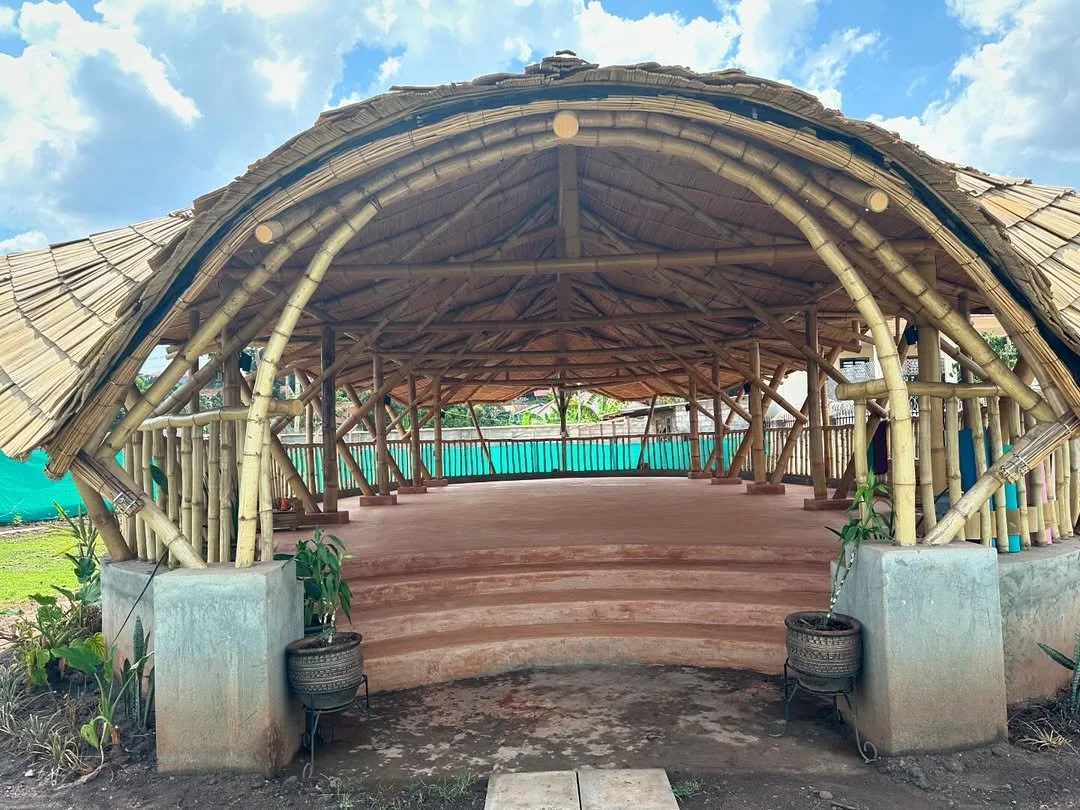
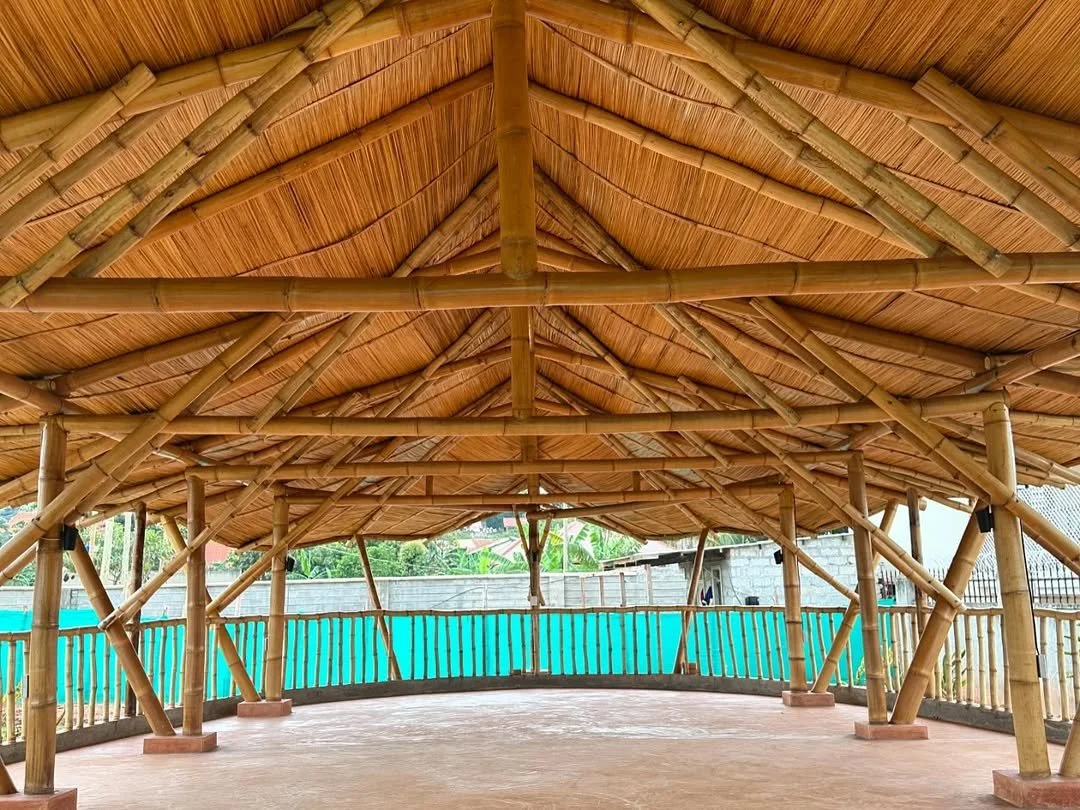
The pavilion measures 8 meters by 15 meters and functions as a flexible, open-plan space accommodating yoga sessions, sound therapy, meditation, and small community gatherings. The absence of internal partitions allows the space to adapt seamlessly to different programs, reinforcing the idea of architecture as an enabler rather than a constraint.
Its defining element is the flowing, organically curved roof, which visually anchors the structure while enhancing thermal comfort and acoustic performance. The form creates a sense of enclosure without isolation—an essential quality for wellness-focused activities.
Structure and Materiality
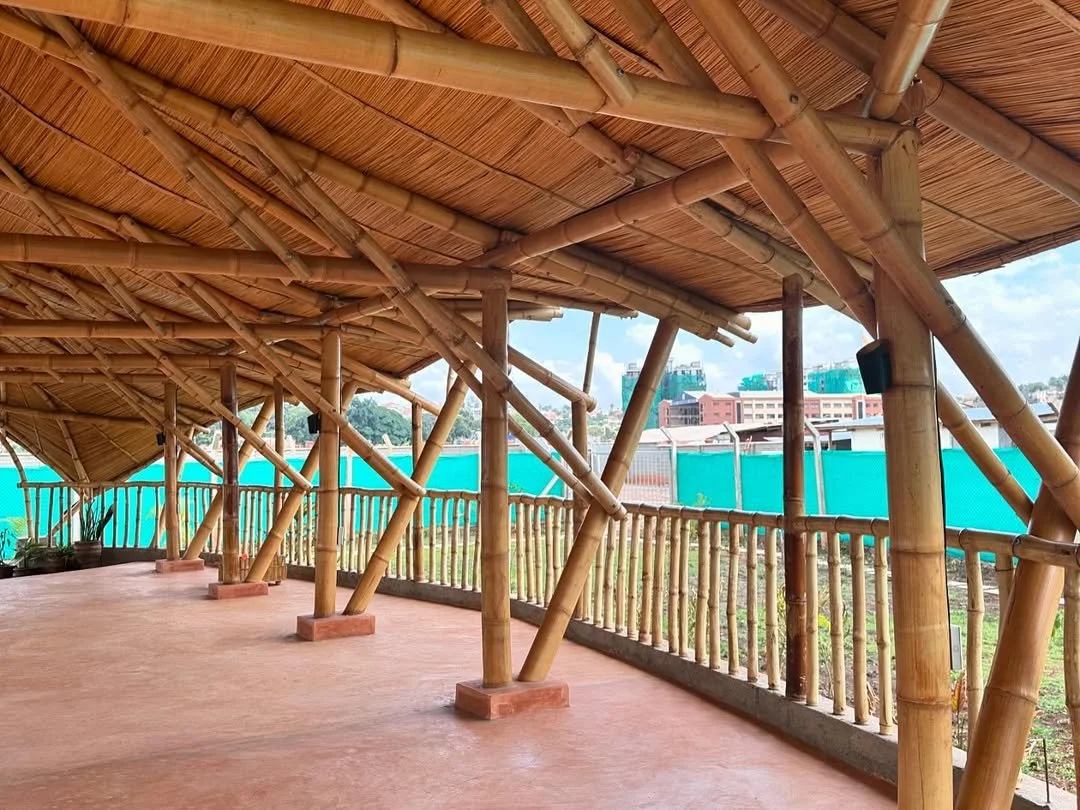
The entire structure is made from bamboo—columns, beams, roof framework, and detailing—establishing material consistency and structural clarity. Locally sourced bamboo was selected for its rapid renewability, high tensile strength, and flexibility, making it well-suited to both structural demands and expressive architectural forms.
By relying exclusively on bamboo, the project minimizes embodied carbon, reduces construction costs, and supports local labor and craftsmanship. The visible structure becomes part of the architectural narrative, celebrating bamboo not as an alternative material, but as a primary building system.
Climate-Responsive Design
Designed for Uganda’s tropical climate, the pavilion employs passive environmental strategies throughout. Open sides promote continuous cross-ventilation, eliminating the need for mechanical cooling. Deep roof overhangs protect the interior from sun and heavy rainfall, while allowing soft, diffused daylight to enter the space.
The structure is slightly elevated to improve drainage and protect the bamboo from prolonged ground moisture, extending its durability with minimal intervention.
Architecture, Wellness, and Community
space. The natural acoustics created by bamboo surfaces enhance sound therapy sessions, while the visual and tactile connection to natural materials fosters calm, focus, and grounding.
The project demonstrates how architecture can simultaneously support mental well-being, environmental responsibility, and socio-economic resilience—without relying on imported systems or complex technologies.
A Scalable Model
The Bamboo Project offers a scalable and replicable model for sustainable architecture in resource-sensitive contexts worldwide. By using local materials, local skills, and climate-responsive design, it challenges the assumption that contemporary architecture must be industrial or globally standardized. Instead, it presents a compelling case for a future where local materials meet global design standards, and sustainability is achieved through restraint, respect, and intelligence.